In today’s real estate market, small spaces are becoming increasingly popular due to their affordability and practicality. However, selling a small home or apartment presents unique challenges. This blog explores the art of staging small spaces to maximize their appeal and help sellers attract potential buyers.
Strategic Furniture Placement
One of the key principles of staging small spaces is strategic furniture placement. By carefully selecting and arranging furniture, sellers can create the illusion of more space. Opt for multi-functional furniture pieces that serve dual purposes, such as a sofa bed or a dining table with built-in storage. Place furniture against walls to maximize floor space and create a sense of openness.
Lighting Solutions
Lighting plays a crucial role in making small spaces feel larger and more inviting. Natural light is ideal, so keep window treatments minimal to let in as much light as possible. Additionally, supplement natural light with strategically placed lamps and overhead fixtures to brighten dark corners. Mirrors can also be used to reflect light and create the illusion of depth.
Declutter and Depersonalize
Clutter can make small spaces feel cramped and overwhelming, so it’s essential to declutter before staging. Remove excess furniture, knick-knacks, and personal items to create a clean and streamlined look. Depersonalize the space by removing family photos and personal memorabilia to help potential buyers envision themselves living in the home.
Neutral Color Palette
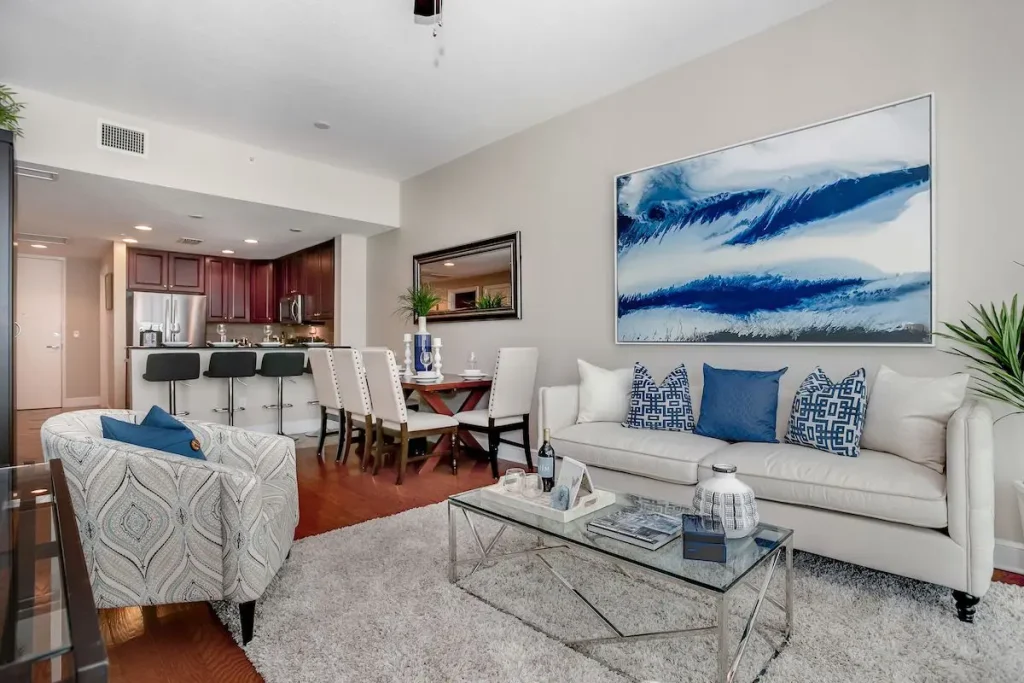
A neutral color palette is ideal for small spaces as it creates a sense of cohesion and openness. Opt for light, airy colors such as white, beige, or light gray for walls and larger furniture pieces. Add pops of color and visual interest with accessories such as throw pillows, rugs, and artwork. Avoid dark colors and busy patterns, as they can make a small space feel crowded.
Create Visual Flow
Creating visual flow is essential in small spaces to guide the eye seamlessly from one area to the next. Arrange furniture to create clear pathways and avoid blocking natural traffic flow. Use area rugs to delineate different zones within a room, such as a living area and a dining area. This creates visual interest while maintaining a sense of unity.
Highlight Unique Features
Small spaces often have unique architectural features that can be highlighted to enhance their appeal. Whether it’s exposed brick walls, high ceilings, or a cozy alcove, draw attention to these features to add character and charm to the space. Use lighting, artwork, and furniture placement to accentuate these elements and make them the focal point of the room.
Outdoor Spaces
If the small space includes outdoor areas such as a balcony or patio, don’t overlook their staging potential. Furnish these areas with small-scale furniture to create an outdoor living space that extends the indoor living area. Add plants, outdoor lighting, and comfortable seating to create a welcoming oasis that buyers will love.
Virtual Staging
In today’s digital age, virtual staging is a valuable tool for showcasing small spaces to potential buyers. Virtual staging allows sellers to digitally furnish and decorate empty or under-furnished spaces, giving buyers a clear vision of the home’s potential. This can be especially useful for small spaces where traditional staging may be challenging due to limited square footage.
Conclusion
Staging small spaces requires a thoughtful approach to maximize their appeal and help sellers attract potential buyers. By strategically arranging furniture, optimizing lighting, and decluttering the space, sellers can create a visually appealing environment that highlights the unique features of the home. With careful attention to detail and creative solutions, small spaces can become highly desirable properties in today’s competitive real estate market.